

Released on Good News Records, Love Song captures the raw energy of the Jesus Movement, born in the pews of Calvary Chapel and fueled by the spiritual awakenings of Chuck Girard, Tommy Coomes, Jay Truax, and Fred Field-four former hippies turned disciples of Jesus. The album’s 12 tracks, clocking in at a lean 37 minutes, mix folk, rock, and gospel with a disarming and magnetic sincerity. Recorded with minimal polish, it leans on acoustic guitars, tight harmonies, and understated percussion, evoking the likes of The Byrds or Crosby, Stills & Nash, but with a singular focus: Jesus as the answer to a generation’s searching.
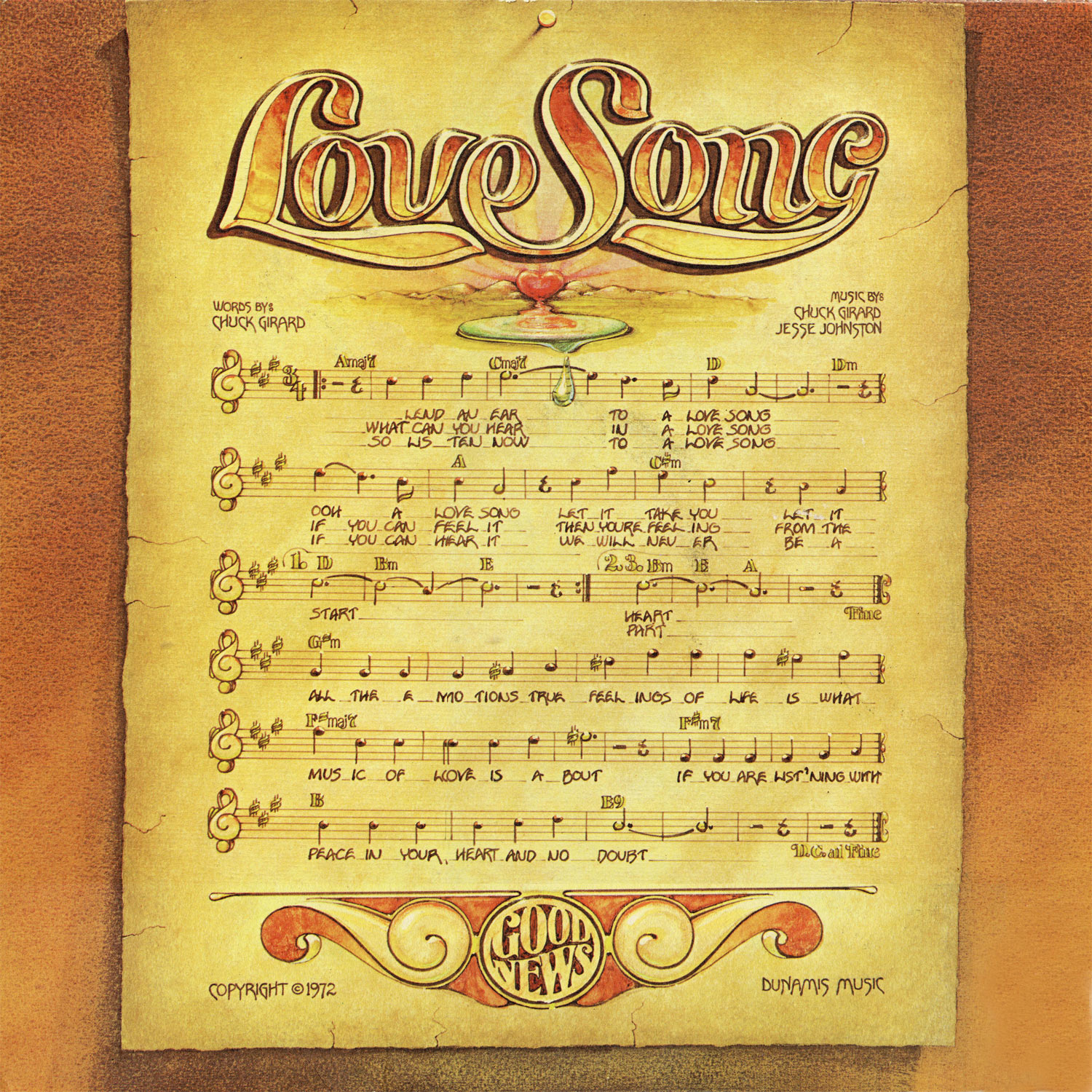
The opening track, “A Love Song,” is the album’s heartbeat; its simple chord progression, and Girard’s tender vocals, deliver an eternal melody. Lyrically, it’s a straightforward declaration, “Lend an ear to a love song/ooh a love song/let it take you, let it start/what can you hear in a love song?/if you can feel it/then you are feelin’ from the heart.” Simple yes, but the economy of words carries profound weight, inviting listeners into a personal encounter with faith. The song’s structure, built on a repetitive acoustic riff, mirrors the meditative quality of a prayer. Its placement as the opener sets a tone of intimacy that carries through the record. It is truly an oh-so-short-and-sweet beginning to the album.
“Changes” stands out as the emotional core, a raw reflection on transformation that showcases the band’s lyrical brevity. Girard’s voice, slightly weathered but convincing, pairs with a shuffle percussion and gentle surf rock guitar lick. The lyrics, “I’m going through changes / changes in my mind /And I’m leaving all my emptiness behind,” echo the prodigal son, yet they’re delivered with a joyous declaration. The song’s strength lies in its simplicity; it never overplays its hand, letting the message stand out and leaving the listener with a desire to skip back and listen again. The harmonious vocals and melody sound like a 1970s take on The Beatles we never got.
“Little Country Church” shifts gears, offering a rollicking tribute to the explosive growth of Calvary Chapel. Its upbeat tempo and jangly guitar work capture the joy of community, while the lyrics paint a vivid scene of “long-haired people” finding a home in faith. The track’s infectious energy makes it practically impossible not to tap along, and demonstrates Love Song’s ability to balance reverence with celebration, a hallmark of their sound. Structurally, it’s a masterclass in storytelling, with a bridge that swells into a triumphant communal chorus. For my money, it is easily the biggest moment of a great album.
The harmonies across the album are a highlight, particularly on “Two Hands,” where the band’s voices intertwine like threads in a tapestry. Drawing from their mainstream rock roots, they craft vocal arrangements that feel both polished and organic, a nod to their influences while remaining distinctly their own. Elsewhere, the harmonies shine on the piano ballad, and other album highlight, “And the Wind Was Low,” as well as the driving acoustic strum of “Let Us Be One.”
From a production standpoint, Love Song is unadorned, with a lo-fi aesthetic that prioritizes feeling over finesse. The mix places vocals front and center, letting the lyrics, often drawn straight from Scripture or personal testimony, carry the weight. This choice aligns with the Jesus Movement’s ethos: strip away pretense, focus on truth. Modern listeners may find the simplicity limiting, but remembering the context of the times and sticking with the album won me over. The simplicity is a strength, not a weakness, as it could seem at first blush. Contextually, Love Song is inseparable from its era. The early ’70s saw thousands of counterculture youth turning to Jesus, and Love Song was their soundtrack, blending hippie aesthetics with gospel clarity. The album’s influence is undeniable; it helped birth contemporary Christian music, paving the way for artists like Keith Green and Second Chapter of Acts. Its crossover appeal, rooted in universal themes of love and redemption, also made it a bridge between secular and sacred audiences, a feat few Christian albums of the time achieved.
Ultimately, the album’s brevity leaves you longing for a deeper dive into the band’s potential. But that hunger is part of its magic; it’s a snapshot, not a saga, meant to stir the soul and point upward. What makes Love Song timeless, though, is its heart. Every note feels a genuine outpouring of faith, not a calculated performance. The band’s journey from rock ‘n’ roll to revival gives the self-titled album a credibility that resonates across generations, whether you’re a believer, or simply drawn to folk-rock’s earnest charm. Tracks like “Little Country Church,” “Brand New Song,” and “Freedom” capture this joy, evoking a sense of divine inspiration that’s hard to shake.
Love Song is a humble masterpiece, a testament to the power of music to carry a movement. Spin it, let it sink in, and you’ll find yourself humming its truths long after the needle lifts. This is one of the pivotal records of the genre and a must for any Christian music historian seeking to understand the music that soundtracked a countercultural movement.
– Review date: 11/8/25, written by Josh Balogh of Jesusfreakhideout.com